
DrWater is a Shopify brand doing around $2M a year, and gifting is a core part of how it grows. Send product to creators, get real content back, repeat. The strategy worked. The operations did not scale. This is what changed when the program moved onto Seed, and the two specific things that made the difference: a branded form on DrWater's own domain, and follow-ups that run themselves.
The starting point: a generic form and a manual grind
The original setup was the one most gifting brands recognize. Creators were sent to a generic third-party form that lived on someone else's domain and looked nothing like the brand. It collected an address and not much else. Every order after that was built by hand. And the real time sink came after the product shipped: reminding each creator to post, asking for the content, and keeping a spreadsheet of who had actually delivered.
At a handful of creators that is annoying. At scale it is a part-time job. The per-creator admin was the ceiling on the whole program, not the gifting budget.
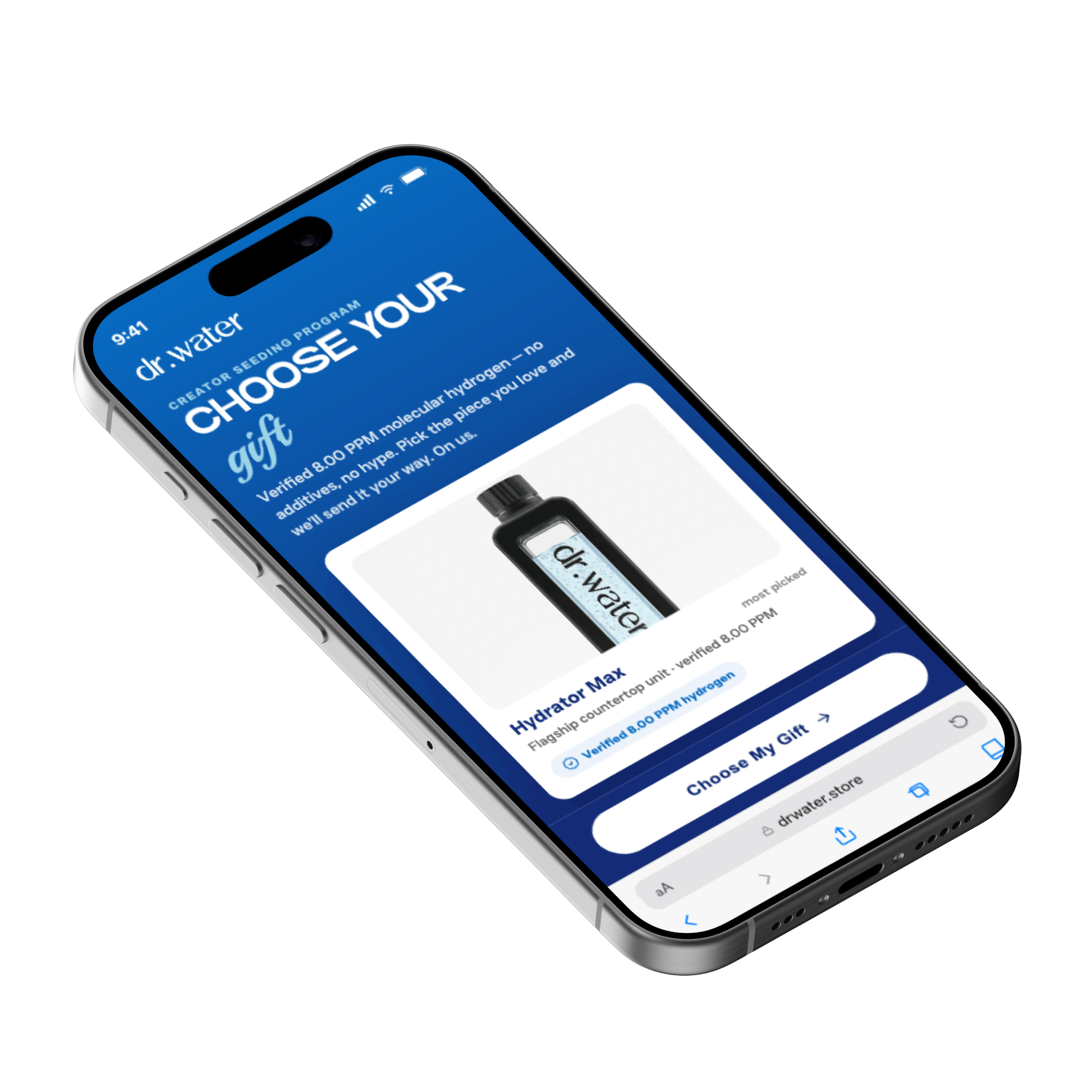
Change one: a branded form on DrWater's own domain
The first move was to stop sending creators to a generic page. With Seed, DrWater's gift form is served from drwater.store itself and styled to match the brand: the same colours, fonts, and logo creators already associate with DrWater. The link a creator opens is a DrWater link, not a third-party one.
This is not a cosmetic point. When the page feels like the brand, more creators trust it and finish it. The generic-form drop-off, where a creator clicks through, sees an unfamiliar tool, and bails, mostly went away. Worth calling out because it is a structural gap: most gifting tools, including influencergiftform.com, cannot serve the form from your own domain at all. Seed runs it on the brand's own storefront, so the form lives at drwater.store/pages/influencer-form instead of someone else's URL.
Change two: follow-ups that run themselves
The bigger win was time. Getting the actual post out of a creator after they receive the product is where gifting programs quietly lose 15 to 20 hours a week. Someone has to remember who got what, when to nudge, and whether the content ever arrived.
Seed automates that loop. Once a creator's gift is delivered, the follow-up messages go out on their own, and delivery is tracked without a spreadsheet. For DrWater that removed 16+ hours a week of manual chasing. The same people could now run a much larger program because the per-creator workload had collapsed.
The result: 100 creators a month
With the form converting better and the follow-ups handling themselves, the program scaled to roughly 100 creators a month. Nothing about the budget changed; the operational ceiling did. The work that used to cap the program at a few dozen creators was the manual admin, and once that was close to zero, volume followed.
The honest summary: gifting was always the easy part. The form and the follow-up were the real bottlenecks, and those are exactly the two things that got fixed.
Want the same setup?
Every piece of this is standard in Seed: the branded form, the own-domain link, and the automated follow-ups. You install the app, choose the products you want to gift, and share one link. If you would rather not set it up yourself, we also do it for you, including styling the form to your brand and sourcing creators that fit. Start on the Seed homepage, or read the broader playbook on creator platforms for product seeding.